



Industrial equipment depends on hundreds of components working together, and not all of them are responsible for moving the heavy loads. Some have a simpler but equally important job: keeping fluids and gases where they belong.
Industrial seals and gaskets create barriers between components to prevent leaks, maintain pressure, and keep contaminants out. While the terms are sometimes used interchangeably, seals and gaskets are designed for different types of connections, operating conditions, and industries.
Understanding the difference between a seal and a gasket, along with the different types available, can help you choose the right component for your equipment and avoid problems caused by the wrong fit or material.
What are Industrial Seals and Gaskets?
Industrial seals and gaskets both help prevent unwanted movement of fluids or gases, but each works differently.
What Is an Industrial Seal?
An industrial seal is designed to prevent leakage between surfaces, often where there’s movement between different components working together. Seals are commonly used around rotating shafts, pistons, bearings, pumps, and other moving equipment.
Because seals often need to accommodate movement while still maintaining a barrier, their design and material need to match the specific application. For example, a seal used around a rotating shaft needs to handle different conditions than one used for a stationary connection.
What Is an Industrial Gasket?
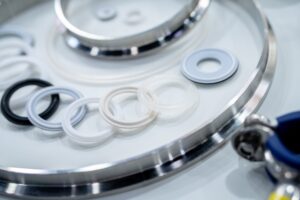
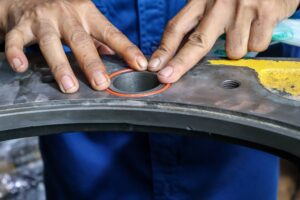
Essentially, an industrial gasket creates a seal between two stationary surfaces. They are typically compressed between “mating” components, like pipe flanges or equipment housings, to fill small imperfections in the surface and prevent fluids or gases from escaping.
Gaskets are commonly used for industrial piping and equipment because they offer a relatively simple way to seal bolted connections. The right gasket needs to withstand whatever conditions the connections could encounter, like pressure, temperature, and exposure to the material being contained.
What Is the Difference Between a Seal and a Gasket?
The main difference between a seal and a gasket is where and how they’re used. Gaskets generally seal stationary surfaces, while seals are commonly used where there is movement between components.
| Feature | Industrial Seal | Industrial Gasket |
| Primary purpose | Prevent leakage around components | Seal the joint between components |
| Typical use | Shafts, pumps, cylinders, bearings | Pipe flanges, housings, bolted connections |
| Movement | Often designed to accommodate movement | Generally used between stationary surfaces |
| Key considerations | Movement, pressure, temperature, fluid compatibility | Pressure, temperature, fluid compatibility, surface conditions |
Understanding each part’s features is a useful starting point, but both have many different designs and specific applications they could be used for. Choosing between them means looking at how the equipment operates and what the sealing component needs to withstand.
Common Types of Industrial Seals
There are several different types of industrial seals, and each is designed for a particular type of equipment or movement.
- O-rings: One of the most common sealing products. Their simple circular design allows them to create a seal when compressed between two surfaces. O-rings can be used in both stationary and some moving applications.
- Oil Seals: Commonly used around rotating shafts. They help retain lubricants while keeping dirt, dust, and other contaminants from entering the equipment.
- Mechanical Seals: Often found in pumps and other rotating equipment where controlling fluid leakage is important. They use carefully matched surfaces to maintain a seal while the equipment operates.
- Hydraulic and Pneumatic Seals: Designed for cylinders and other fluid-power equipment. They help maintain pressure in hydraulic or pneumatic systems while allowing components such as pistons or rods to move.
- Lip Seals: Use a flexible lip to create a barrier around a shaft or other moving component. They are commonly used when a component needs to retain lubricant or prevent contaminants from entering.
With so many types of industrial seals out there, the right choice depends on more than the shape of the component. Movement, pressure, temperature, fluid compatibility, and the surrounding environment all need to be taken into consideration when choosing the right seal.
Types of Industrial Gaskets
Industrial gaskets often come in a range of materials and designs because different applications require different levels of flexibility, temperature resistance, pressure handling, and chemical compatibility.
Some common types of industrial gaskets include:
- Rubber Gaskets: Flexible and useful in many general sealing applications. Different rubber compounds provide different levels of resistance to oils, chemicals, temperature, and other working conditions.
- Cork and Rubber Gaskets: Combine the adaptability of cork with the sealing properties of rubber. They can be useful where a gasket needs to compress and account for minor surface irregularities.
- Compressed Fiber Gaskets: Commonly used in industrial piping and equipment. They are available in different materials to handle a range of fluids, temperatures, and pressures.
- Metal Gaskets: Designed for demanding environments where higher temperatures, pressures, or other operating conditions require a tougher sealing material.
- Spiral-wound Gaskets: Combine metal with a filler material and are commonly used in flange connections where the gasket needs to handle demanding operating conditions.
The important thing is not to choose a gasket material simply because it sounds durable. The material needs to be tailored for the conditions around it to get the best performance out of your equipment.
How to Choose the Right Industrial Seal or Gasket for Your Application
There is no single seal or gasket that will be best for every application, so it’s important to choose the component that can both complement and withstand your current setup.
1. Identify the Material Being Sealed
What will the seal or gasket actually be containing? Water, oil, air, steam, chemicals, and other fluids can all react differently with sealing materials.
For example, EPDM rubber is commonly used when interacting with water or steam, but it’s generally a poor choice for applications involving oil. For an application that handles oil, materials like nitrile rubber may be the better fit.
Material compatibility is one of the first things you should verify when selecting an industrial gasket or seal because a component that deteriorates when exposed to the material it’s meant to contain wouldn’t provide reliable protection for very long.
2. Check Temperature and Pressure
Temperature and pressure can put a lot of stress on a sealing component. A material that performs well under normal conditions may not perform the same way if temperatures or pressures regularly exceed the intended range.
Consider both the normal, day-to-day operating conditions and any common changes or spikes the equipment may experience.
3. Account for Movement
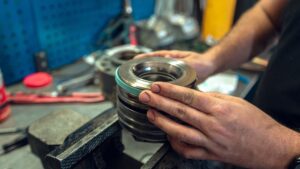
Movement is one of the biggest factors separating seals from gaskets.
A gasket typically sits between two stationary surfaces and doesn’t offer much security for moving components, while a seal may work around a rotating shaft, reciprocating piston, or another moving part. A sealing component needs to accommodate for the right level of movement without losing its ability to prevent leaks.
4. Match the Equipment and Application
The same type of seal or gasket won’t be appropriate for every piece of equipment. Pumps, hydraulic systems, piping, valves, gears, and other industrial machinery can have very different sealing requirements.
| Equipment or Application | Typical Sealing Requirement |
| Rotating pump shaft | A seal that can accommodate continuous rotation while containing fluid |
| Hydraulic cylinder | A seal designed for reciprocating movement and high fluid pressure |
| Pipe flange | A gasket that can compress between stationary surfaces and withstand the system’s pressure & temperature |
| Gearbox | A seal that helps retain lubricant while keeping dirt and contaminants out |
| Valve connection | A gasket or seal compatible with fluid, pressure, temperature, and connection type |
The connection itself matters, too. The available space, mating surfaces, dimensions, and installation methods can all affect which sealing solution will get the job done.
5. Evaluate the Operating Environment
Conditions outside the equipment matter just as much as what is happening inside it. Dirt, moisture, chemicals, abrasion, and outdoor exposure can all affect sealing performance.
Choosing a component based on its size or appearance is one of the most common mistakes when choosing the right seal or gasket, but it can be prevented by looking at the operating environment as a whole.
What Happens If You Use the Wrong Seal or Gasket?
A seal or gasket may be a relatively small part of a much larger piece of equipment, but a failure can have much bigger consequences.
The wrong component can lead to:
- Fluid or gas leaks
- Loss of pressure
- Contamination
- Premature wear
- Equipment downtime
- Damage to surrounding components
- Potential safety concerns
For example, a gasket that cannot handle the operating temperature may break down and allow a flange connection to leak. A seal that’s not compatible with the equipment’s fluid may swell, harden, or wear prematurely.
That’s why it’s important to select sealing components based on the full application instead of simply matching the dimensions of the old part.
Find Quality Industrial Seals & Gaskets with Magnum Industrial
Choosing the right seal or gasket starts with understanding what the component needs to handle to help prevent leaks, protect surrounding equipment, and keep your system operating reliably.
Whether you need a replacement seal, a gasket for an industrial connection, or help determining which connection material is right for your equipment, Magnum Industrial can help you identify the best sealing solution for your equipment, operating conditions, and application.
Contact Magnum Industrial today to discuss your sealing needs and find the right industrial seal or gasket for your application.